Family naturism in Europe is both old and modern. The organized naturist movement is mainly a product of the late 19th and 20th centuries, but the cultural soil beneath it is much older: communal bathing, river swimming, saunas, spa cures, sun-and-air health movements, and rural attitudes in which the unclothed body was not automatically sexualized.
Modern naturism emerged most clearly in German-speaking Europe through Freikörperkultur, or FKK, “free body culture.” It grew from late-19th-century reform movements reacting against industrial cities, rigid clothing, poor health, and moral shame. The ideal was not exhibitionism. It was sunlight, air, exercise, nature, equality, and a more honest relation to the human body. By the early 20th century, nude bathing and naturist associations were appearing in Germany, on Baltic and North Sea beaches, and eventually across France, Britain, Scandinavia, the Netherlands, Croatia, and the Black Sea world.
After World War II, naturism became more organized and international. The International Naturist Federation developed from postwar meetings in the early 1950s, as national groups and clubs began to coordinate across borders. In 1974, the federation adopted a definition still widely used today: naturism as a way of life in harmony with nature, expressed through communal nudity and based on self-respect, respect for others, and respect for the environment.
France gave naturism one of its most influential models. In the late 1920s and early 1930s, doctors André and Gaston Durville promoted naturism through health, vegetarianism, physical exercise, sunlight, and psychological restoration after the traumas of World War I and the Spanish flu. Their approach worked hard to separate nudity from sexuality, presenting naturism as wholesome, athletic, and nature-centered.
The war years and authoritarian politics complicated everything. In Nazi Germany, naturism was initially attacked as morally and politically suspicious, then partly absorbed into state-approved ideas about health, discipline, and the body. In communist East Germany, FKK later became popular in a different way: a rare sphere of ordinary personal freedom in a controlled society. On beaches and campsites, class markers, uniforms, and official roles disappeared with clothing.
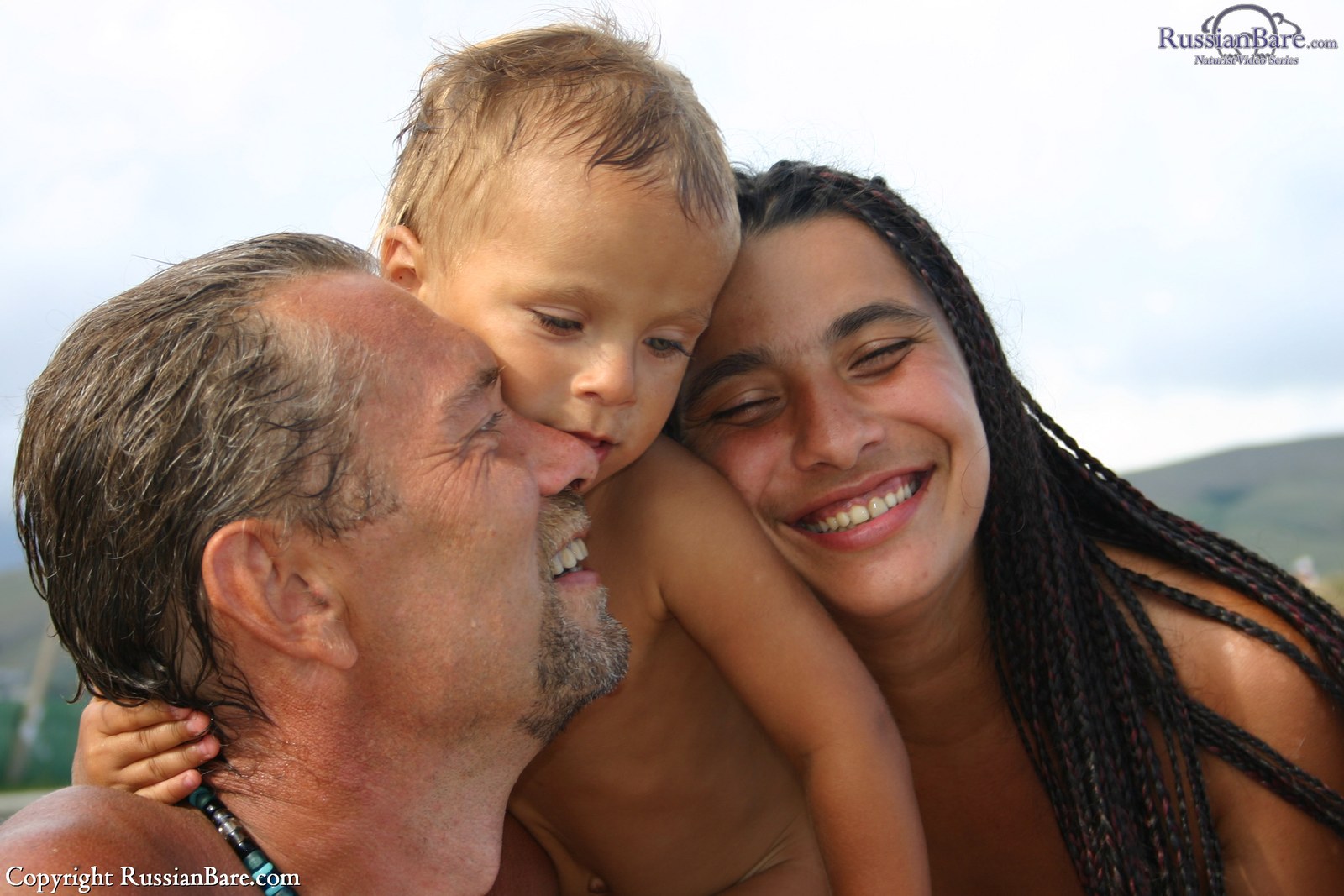
Over the last hundred years, European attitudes shifted from scandal to toleration to commercial normalization. In Germany, Croatia, France, Spain, Denmark, and the Netherlands, family naturism became a recognizable holiday form: campsites, beaches, clubs, sports days, swimming galas, youth events, and intergenerational summer traditions. Many families treated it as ordinary outdoor life, closer to camping or swimming than to anything erotic.
But the last 20 years have been more mixed. On paper, acceptance has broadened. Many Europeans are comfortable with nudity in dedicated naturist places such as beaches and campsites. At the same time, organized naturism has aged. Clubs in some countries have struggled with declining membership, fewer young participants, anxiety about smartphone photography, and competition from more profitable forms of tourism such as glamping.
Development pressure has been one of the biggest threats. Naturist spaces often survive because they are marginal: dunes, remote coves, islands, forests, lakesides, old camps, and unfashionable coastlines. Once land becomes valuable, the naturist tradition is often pushed aside. Croatia shows this clearly, as some long-standing naturist resorts have reduced naturist areas in favor of conventional tourism.
The Black Sea has its own naturist history, more bohemian and less bureaucratic than Western Europe’s resort model. Koktebel in Crimea became famous in the early 20th century through poets, artists, and the circle around Maximilian Voloshin. Its naturist tradition was tied to bohemian freedom, informal bathing, and escape from metropolitan respectability. Nearby Fox Bay also became known as a remote tent-camping naturist destination.
Crimea’s naturist culture has been hit less by a single anti-naturist law than by the collapse of the conditions that made it possible. Before Russia’s 2014 annexation, Crimea drew Ukrainians, Russians, Europeans, artists, campers, festivalgoers, and beach families. After annexation, international tourism narrowed sharply. Since Russia’s full-scale invasion of Ukraine in 2022, beach life has been further altered by suspended flights, difficult overland routes, militarized coastlines, closed beaches, trenches, anti-tank barriers, and fear of strikes.
This has affected not only naturist beaches but the broader culture of Crimean summer freedom. KaZantip, the huge post-Soviet beach festival associated with Crimea from the 1990s through 2013, once symbolized cross-border youth culture, self-expression, and pleasure. After the war, even the letter “Z,” once associated with that festival’s playful identity, became inseparable from Russian war propaganda for many former participants.
Russia shows another pressure point: conservative politics redefining public nudity as incompatible with “family” space. St. Petersburg’s Dunes beach near Sestroretsk, on the Gulf of Finland, had been used by naturists since the Soviet era. In recent years, local authorities and politicians have pushed to rebrand or restrict the naturist area as a regular “family-friendly” beach.
That phrase “family-friendly” reveals the cultural divide. In European naturism, family naturism means a nonsexual, respectful environment where bodies are ordinary. In conservative anti-naturist politics, “family-friendly” is used to mean the removal of visible nudity from shared public space. The same word points in opposite directions.
The long-held traditions of European naturism remain: family beach holidays, FKK lake swimming, sauna culture, naturist camping, summer sports, international swimming galas, World Naturist Day events, barefoot walking, mudflat hikes, and the old ritual of returning each year to the same beach or campsite. But the future depends on more than tolerance. Naturism needs land, privacy from cameras, legal clarity, intergenerational trust, and peace.
In Europe, naturism has always flourished where ordinary people could claim a piece of nature without fear. War, militarization, authoritarian politics, commercial development, and digital surveillance all shrink that possibility. Yet the ideal keeps returning: the body without shame, the family without pretense, and nature not as scenery but as a place where people can belong.